Agriculure / Biogas

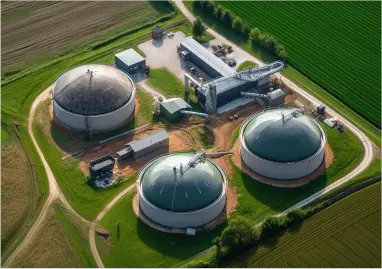
The greatest benefit for agriculture application is observed when biomass is used as fuel (crop residues, wood, animal waste, etc.). Gases obtained from biomass can be used in reciprocation gas engines, which prepared for operation on such gas, as a fuel. Anaerobic digestion of animal waste produces biogas (60% methane + 40% carbon dioxide), which can also be used as fuel. Heat and electricity generated from biogas can be used in agricultural processes or sold to the grid Power generation based on biogas is part of Renewable Energy source which provides energy without the planet-warming effects of fossil fuels.

Contact us

Applicable Fuel

Natural gas
Biogas
etc.

Main Application of Gas Engines Power Solution

01
Cattle farm
02
Agriculture sector
03
Biogas complex

Favorable Conditions for Own Cogeneration Power

01
Capability to produce biogas
02
Requirement to dispose waste
03
Economic benefits from biogas - electricity + heat conversion

Solution Advantages

01
Biomass utilization
02
Reduction in overall emissions
03
High efficiency (>90%) source of simultaneous production of electricity and heat from single fuel
04
Fast return on investment in a cogeneration plant
05
100% source of renewable energy
06
Container version of mini-CHP, compactness and minimal weight, complete pre-manufactured solution with minimal construction work on site

How it works

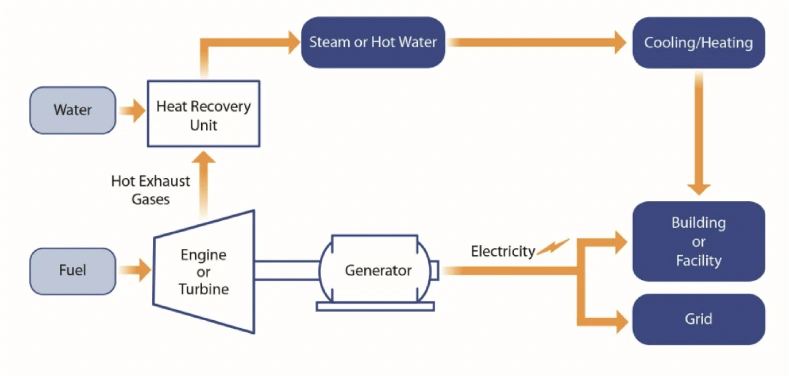
Electricity generation from biogas using gas engines involves several steps, which are outlined below:
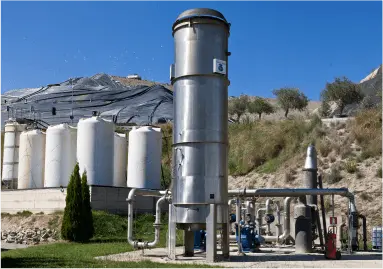
  • Collection and pre-treatment of biogas: Biogas is produced by the anaerobic digestion of organic materials such as food waste, agricultural waste, and sewage. The biogas is collected from the digestion process and may need to be treated to remove impurities such as hydrogen sulfide and moisture before it can be used in gas engines.
  • Fuel preparation: The biogas is typically piped or compressed into storage tanks, where it is mixed with air to achieve the proper fuel-air ratio for combustion in the gas engine.
  • Combustion: The biogas-air mixture is injected into the gas engine, where it is compressed and ignited by a spark plug. The combustion of the fuel generates heat, which is converted into mechanical energy that drives a generator to produce electricity.
  • Heat recovery: The exhaust gas from the gas engine is typically quite hot and can be used to generate steam or hot water for use in other processes, such as heating or cooling.
  • Overall, electricity generation from biogas using gas engines is a highly efficient and sustainable process that can help to reduce greenhouse gas emissions and provide a reliable source of renewable energy.
Learn More About

Contact us

"Lorem ipsum dolor sit amet, consectetur adipiscing elit, sed do eiusmod tempor incididunt ut labore et dolore magna aliqua.